The US Federal Communications Commission blocks two devices using surveillance chips from Huawei subsidiary HiSilicon from entering the American market. The ban follows new FCC rules effective 13 October 2026 targeting components from entities on its covered list, which includes HiSilicon. The move underscores ongoing US efforts to reduce reliance on Chinese semiconductor technologies. (THERECORD)
Poland warns Microsoft outage exposes tech reliance risks
PolandNews
Poland’s government states the Microsoft outage revealed vulnerabilities in relying on foreign technology firms, calling for stronger digital sovereignty measures. The incident highlights the need for greater control over critical digital infrastructure, according to a government statement. (PAP)
Poland highlights risks of over-reliance on global tech giants after
EU leaders discuss AI sovereignty at Dublin summit
News
EU leaders at a Dublin summit addressed AI sovereignty and strategic autonomy, with France and the Netherlands planning a December meeting to coordinate homegrown tech development. Mistral CEO Arthur Mensch urged redirecting €260 billion spent on foreign tech to European alternatives. The summit’s AI focus was overshadowed by Ukraine
This is a test: What Day 1 of the great Office shutdown would look like
Tools and techOpinionTools and tech
This morning, Europeans across the private and public sectors, as well as private individuals, woke up to defective Microsoft services that had been offline or partially offline for several hours during the night. Today will show us what this kind of dependency looks like in real life. It's
We are missing a messenger
Deep DivesTools and techTelecomEUDeep Dives
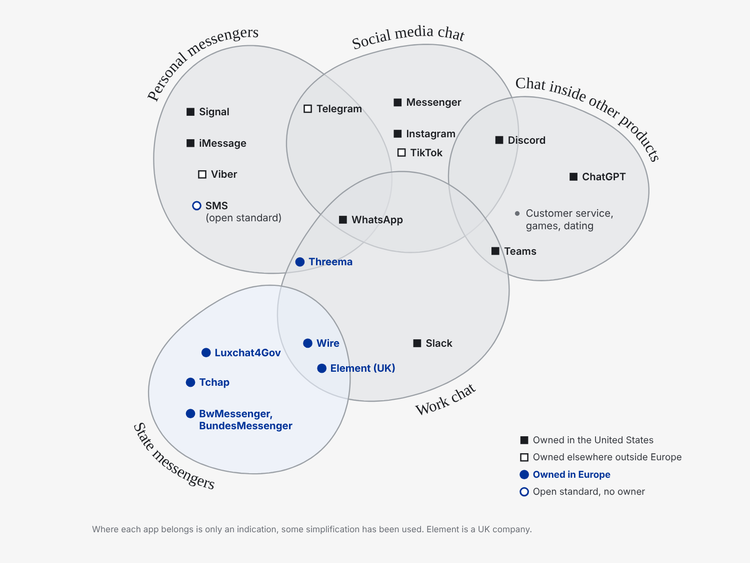
Europeans run their families, their jobs, and their politics through chat apps, and almost none of those are built or owned in Europe. Why nobody leaves, why the EU’s law forcing WhatsApp open has barely been used, and how Europe could connect its islands of chat.
Protecting children without checking everyone
OpinionEntertainmentOpinion
The EU Kids Act goes after real harm to our children. But to get there, it would require proof of age before anyone opens an account on the largest platforms. But can't we protect children by changing the services instead?
Christian Triantafillou Schade— Digital pioneer, tech reporter, corporate revolutionary. Christian Triantafillou Schade covers Europe's push for digital sovereignty from the public record. He consults on process improvement and tooling.