London-based Callosum raises €85.4 million in Atomico-led Seed round to unify AI models and chips
Callosum, a London-based startup building infrastructure to unify different AI models and chips, has raised €85.4 million ($100 million) in a Seed round to advance what it calls “heterogeneous intelligence”.
The round was led by Atomico, with significant participation from Plural, DCVC, and the UK Sovereign AI Fund, as well as other investors and angels. The UK government formally launched the €573 million (£500 million) Sovereign AI initiative in April 2026 to back British AI startups working in areas seen as strategically important for both economic growth and national security. Callosum said the raise would help it “redefine how humanity computes for AI’s next chapter”.
“As AI moves from training to inference, the question is no longer just who builds the best models. It’s how we deliver intelligence efficiently, across an increasingly diverse landscape of models and chips,” said Niklas Zennström, CEO of Atomico.
He added, “That’s what makes Callosum so compelling. They’re building the software layer that intelligently routes AI workloads to the right compute, making AI faster, more efficient and more accessible without adding complexity.”
The Seed round follows an €8.76 million ($10.25 million) pre-Seed raise announced in February 2026, which was led by Plural with participation from 22 investors and support from the UK’s Advanced Research + Invention Agency (ARIA).
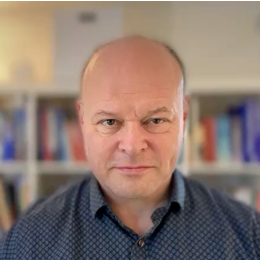
Founded in 2025 by Jascha Achterberg and Danyal Akarca, Callosum was born from the idea that the future of AI does not lie in who builds the biggest frontier model or who owns the best AI infrastructure, but in orchestrating many different models across many types of silicon.
Alongside the funding announcement, Callosum said it is the first-ever investment made by the UK Sovereign AI Fund, and that the company has also been named in the UK government’s £1.1 billion AI hardware plan.
“AI is nothing without the chips that underpin it – and the eye-watering demand for them is only going to grow. In the race to develop and use AI, success will depend not just on having access to those chips, but on using them as efficiently as possible,” said Kanishka Narayan, Minister for Artificial Intelligence, UK Government.
Callosum argues that new AI models and the specialised chips that power them are arriving simultaneously, and that harnessing this diversity can unlock major gains in AI capability and cost-efficiency. To advance its heterogeneous intelligence, Callosum revealed three major developments as part of its Seed funding round.
The first is a wave of global compute partnerships, including a “flagship partnership” with Cerebras Systems aimed at bringing low-latency, multi-agent AI to customers at scale, plus partnerships with chipmaker Rebellions and other infrastructure providers and OEMs worldwide.
The second is what the company calls advances in “programmable heterogeneity”: the ability to break AI workloads into smaller compute tasks and route each to whichever model and chip run it most efficiently. This ability, tailored for constraints such as cost, energy, and speed, could be the silver bullet here.
The third is the rollout of “Tailored Inference” in production, a family of APIs that Callosum says is already delivering performance and cost improvements in fields including cybersecurity and finance.
Andrew Feldman, CEO of Cerebras Systems, said, “By integrating Cerebras into Callosum’s platform, we’re making ultra-low-latency inference available exactly where it creates the greatest impact, enabling customers to build AI systems that simply weren’t practical before.”
With a founding team whose backgrounds span neuroscience and hardware-software co-design, and members drawn from Cambridge, Oxford, MIT, Imperial College London, Microsoft, ETH Zurich, and Intel, Callosum has grown to include founding engineers, technical staff, and operational leads across the UK and the US.
In a February 2026 blog post, the company argued that the AI industry’s traditional approach of bigger models on the same chips is breaking down, because most real-world AI problems are inherently heterogeneous and require different, complementary forms of intelligence rather than one dominant model.
For AI companies around the world, infrastructure or compute has become the biggest bottleneck. By offering customers a library of APIs that route AI workloads across a global network of silicon partners, continuously profiling combinations of models and hardware so that systems stay on what the company calls “the Pareto frontier” of cost, speed and performance as the underlying technology evolves, Callosum sees its “Tailored Inference product” as the solution.
The post London-based Callosum raises €85.4 million in Atomico-led Seed round to unify AI models and chips appeared first on EU-Startups.